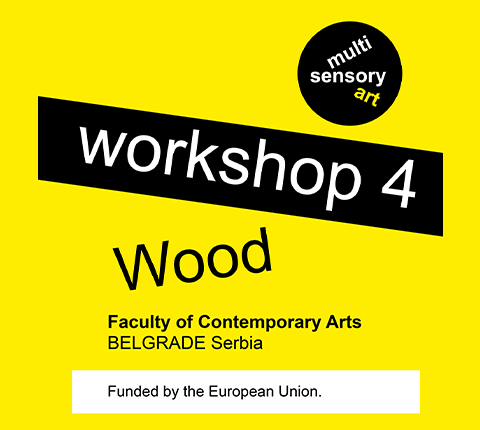
Dana 24. i 25. aprila 2025. godine na Fakultetu savremenih umetnosti održana je poslednja od četiri radionice u okviru regionalnog projekta „Multisenzorna umetnost“ (Multisensory Art). Ovaj projekat ima za cilj da kroz umetnički izraz poveže različite senzorne doživljaje i omogući inkluzivno stvaralačko iskustvo, sa posebnim akcentom na osobe sa oštećenim vidom.
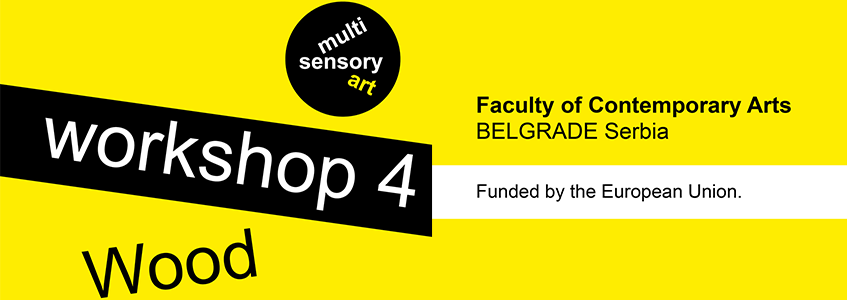
Ova radionica pružila je osobama sa oštećenjem vida priliku da se povežu sa prirodnim materijalom kao što je drvo i istraže njegovu teksturu, strukturu i izražajni potencijal kroz osnovne tehnike duboreza.
Rad sa drvetom otvara vrata istraživanju kroz reljef, formu i ritam linija, ali iziskuje preciznosti pokreta. Učesnici su uz podršku stručnih vodiča i umetnika sa iskustvom u radu, savladavati bezbedno korišćenje alata i upoznali se sa tradicionalnim i savremenim pristupima ovoj tehnici.
Poseban fokus radionice stavljen je na razvijanje osećaja za detalj kroz dodir, uz verbalne instrukcije, taktilne primere i postupno vođenje kroz proces stvaranja.
Cilj ove radionice nije samo sticanje veština već i osnaživanje ličnog izraza, otkrivanje novih načina komunikacije kroz umetnost. Učesnici radionice su bili slepe i slabovide osobe kao i studenti FSU sa smera vizuelnih umetnosti.
Radionicu je vodio docent vajanja Ivan Bon uz veliku pomoć Milice Stojković, saradnice u nastavi dok su podršku u realizaciji pružili studenti Fakulteta savremenih umetnosti – Nina Bon, koja je bila zaduženaza fotografiju i video, i Milan Kusmuk, koji je bio logistička i tehnička podrška učesnicima.
Radionica je još jednom potvrdila koliko umetnost može doprineti inkluziji, međusobnom povezivanju i otvaranju prostora za nove oblike izražavanja. Učesnici su pristupili radu sa velikom kreativnošću, otvorenim umom i spremnošću da istražuju i eksperimentišu, dok je atmosfera bila dinamična, inspirativna i ispunjena kolektivnom energijom.
Radovi nastali tokom svih radionica postaće deo zajedničke izložbe koja će objediniti različita iskustva, pristupe i senzibilitete.
Fakultet savremenih umetnosti sa zadovoljstvom pruža podršku ovakvim projektima, koji promovišu interdisciplinarnost, spajaju umetnički izraz sa savremenim tehnologijama i otvaraju umetnički prostor svima – bez prepreka i ograničenja.
The Fourth Workshop of the Regional Project “Multisensory Art” Held at FSU: Wood
On April 24 and 25, 2025, the Faculty of Contemporary Arts hosted the final in a series of four workshops within the regional project „Multisensory Art“. The aim of this project is to connect various sensory experiences through artistic expression and to provide an inclusive creative environment, with a particular focus on individuals with visual impairments.
This workshop offered participants with visual impairments the opportunity to engage with a natural material—wood—and to explore its texture, structure, and expressive potential through the fundamental techniques of wood carving.
Working with wood opens up possibilities for exploring relief, form, and the rhythm of lines, while also requiring precision in movement. With the support of skilled guides and artists experienced in inclusive practices, participants learned how to safely handle tools and became familiar with both traditional and contemporary approaches to this craft.
A key focus of the workshop was on developing a sense of detail through touch, with the help of verbal instructions, tactile samples, and step-by-step guidance throughout the creative process.
The goal of this workshop extended beyond the acquisition of technical skills—it aimed to empower personal expression and encourage the discovery of new forms of communication through art. The workshop participants included blind and visually impaired individuals, as well as students from FSU Visual Arts program.
The workshop was led by sculpture assistant professor Ivan Bon, with great support from teaching associate Milica Stojković. Additional support was provided by students from the Faculty of Contemporary Arts – Nina Bon, who was in charge of photography and video, and Milan Kusmuk, who provided logistical and technical support to the participants.
Once again, the workshop demonstrated how art can foster inclusion, connection, and the exploration of new expressive forms. Participants approached the creative process with imagination, openness, and a willingness to experiment, while the overall atmosphere was dynamic, inspiring, and filled with collective energy.
The works created across all workshops will be featured in a collective exhibition that brings together diverse experiences, approaches, and sensibilities.
The Faculty of Contemporary Arts is proud to support initiatives like this one—projects that promote interdisciplinarity, connect artistic expression with modern technologies, and create open spaces where art is accessible to all, without barriers or limitations.
Finansirano od strane Evropske unije. Izraženi stavovi i mišljenja su, međutim, isključivo stavovi i mišljenja autora i ne odražavaju nužno stavove Evropske unije ili Izvršne agencije za obrazovanje i kulturu (EACEA). Ni Evropska unija ni EACEA ne mogu biti odgovorne za njih.